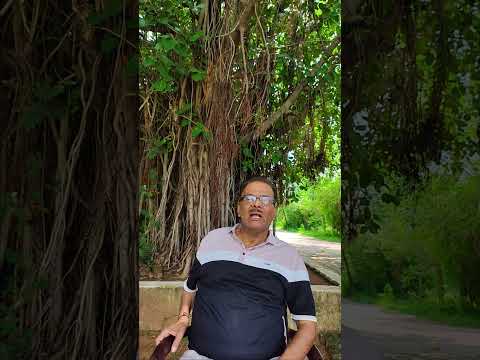
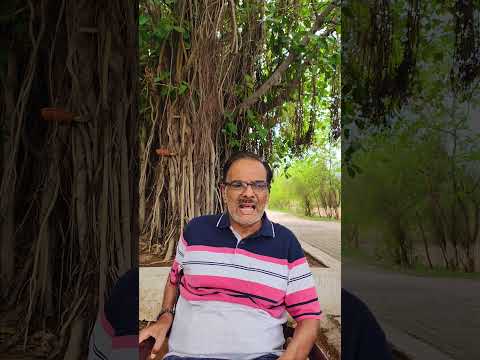
Fear of failing an exam, of losing money, of illness, of a relationship breaking: Dr. Jain says everyone carries some fear, himself included. In a series of short talks he returns to the same point again and again. Most fears are imagined, and the way out is not to run from them but to face them.
What follows brings together five of his talks, from one-minute Shorts to the third part of his series on happiness, along with what he said about fear in his 2025 interview.
Look fear in the eye
Fear, he says, keeps you alive in name only, like a patient lying in intensive care. You have a whole sky inside you, yet you cannot fly. His advice is direct: don’t run from fear and don’t hide it. Face it, the way someone faces a lion, and it weakens on its own.
डर से भागो मत। डर को छिपाओ मत। डर से आँखें मिलाओ और डर का सामना करो।
Don’t run from fear. Don’t hide it. Look it in the eye and face it.
Most fears are not real
Think of the rustle of leaves at night, or the feeling on a dark road that someone is following you. Fear of shadows, of darkness, of heights, of something unknown. Most of these, he points out, turn out to be imaginary. The outer fears fade on their own once you see them for what they are. The harder work is with the fears that settle inside the mind and stay there.
When the fear is about health
The hardest fears, he admits, are about illness: will I recover, will I walk, what will happen to my family. These are not cured by reasoning alone. He speaks of faith, belief and willpower; of slow, deep breathing; and of talking it through with good friends or with someone who understands the subject, such as a psychologist.
विल पावर को कमज़ोर ना होने दें। अपने विश्वास को कमज़ोर ना होने दें।
Don’t let your willpower weaken. Don’t let your faith weaken.
Stop waiting for perfect
Overthinking traps us like a net. We plan and plan, and when it is time to act we wait for perfection. But no one, he points out, succeeded the first time, whether a film actor or a runner on the track. Make the mistake today and learn from it tomorrow. Overthinking, he warns, can spoil sleep, health and relationships.
Detox the mind
Like a closed room full of dust, the mind needs cleaning. His five steps: forgive; forget the comments about your clothes, your looks or your failure; find joy in small things; notice the child who smiles or the neighbour who says good morning; and keep away from people who only criticise. If you failed the Pre, he adds, you will reach the Mains next time.
Put a stop-loss on worry
In the third part of his series on happiness he calls worry poison. Give it a fixed time, he suggests, then set it aside, as a ship keeps water in one compartment so that it does not sink. Share your problem. And, like a share trader, put a stop-loss on worry before it costs you more.
चिंता मनुष्य के लिए चिता के समान है।
Worry is like a funeral pyre for a person.
Don’t make the problem bigger
Worry grows, he says, because we look at our problems and mistakes through a magnifying glass and think of nothing else. Set the problem aside for a while: what looks huge tonight may look small tomorrow, or the day after. Stop scratching old wounds, your own or other people’s; a wound that is scratched does not heal. And let go of insults. He has seen people carry a harsh word for years, when the person who said it may simply have been having a bad day.
A word for students in Kota
He lives in Kota, the coaching city, and the subject is close to him. He has seen young people take their own lives over small worries: marks, a parent’s hopes, a scolding about money. A father who says “get out of my sight” in anger does not mean it, he reminds them; parents say things when they are troubled, and they love their children. No mark sheet is worth a life. Share what you feel with someone, and give the worry time to shrink.
परेशानी को थोड़ी देर के लिए आप अलग छोड़ें… आज जो बहुत बड़ी बात नज़र आ रही है, कल वह छोटी हो जाएगी।
Set the problem aside for a while… what looks huge today will look small tomorrow.
Why he is not afraid
Asked in 2025 why he never seems afraid, he gave two reasons. First, he has never compared himself with others, with what a neighbour or relative earns or owns; comparison, he says, keeps the mind anxious. Second, he looks for possibility: even in a faint light there is possibility. He quotes the Gita’s lesson to make the effort without clinging to the fruit, because even failure teaches something. Fear, he says, comes from refusing to accept change, so drop the fear and make life better.
हल्की सी रोशनी में भी संभावना है।
Even in a faint light there is possibility.
Videos in this article





Written from Dr. Jain’s own videos; his words are translated from Hindi on the English page.