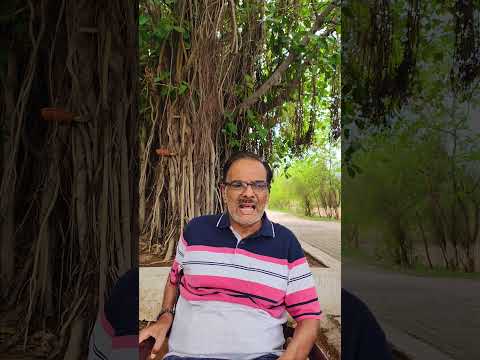
In his series ‘The Power of Happiness’, Dr. Jain keeps coming back to a few simple practices for living well. None of them is new, he admits. Most come from the Gita, the Buddha, Mahavira, Gandhi and the habits of ordinary people who were content. What he adds is the voice of a teacher who has tried them himself.
This article gathers those practices: how to begin the day, how to pursue a goal, how to give life meaning, and where to look for joy.
Life is a festival
Celebrate life, he urges young people. If sadness comes, let it pass: listen to music, sing or even dance alone. But don’t wrap yourself in sadness from the past, a failed exam, a harsh word, a loss in the family. Carried around, it halves every happiness that follows.
Wake up fresh, not with yesterday’s worries, and thank God that you are alive today. Life will not last for ever, so celebrate it the way we celebrate festivals, with family and friends. And share your happiness: that is why we invite people to weddings. The more you share it, the more it grows.
उदासी को रूपांतरित करना है… उत्सव में।
Turn sadness into celebration.
Five habits for every morning
First, gratitude: thank God, since many people do not wake up at all; thank your teachers and parents, and nature, which gives you air and water worth lakhs for free. Second, in the early morning, do slow, deep breathing and anulom-vilom, and chant Om from deep in the belly; it strengthens the heart and lungs.
Third, smile at the people you meet, and try to make at least one person laugh each day. Fourth, forgive, and ask forgiveness, at home and at work. Fifth, don’t stretch every conversation or react to everything. Do you really need an opinion on what every famous person in the news is doing?
Don’t read meanings into everything
Two habits make life simpler, he says. First, don’t attach your own meanings to what someone said, did or sent in a message. Often the meaning was never there, and we disturb ourselves for nothing. As children we were made happy by small things and did not look for happiness outside.
Second, accept a result you cannot change, whether an exam, a business or a job, and don’t magnify it. Your mind stays cheerful, your family stays happy, and you avoid the illnesses an unhappy mind invites.
The four Ps
For any goal he offers four Ps. Patience: turn back halfway, take the Pre but not the Mains, read half a book, and nothing comes of it. Presence: be in the work with your mind, not just your body. Pursue: keep repeating to yourself what you want to become, and keep at it.
And passion, which should burn like a fire. How much are you willing to give up for it, he asks: some entertainment, some sleep, some of what you enjoy, for a few weeks or months? If the answer is yes, you will succeed.
Give life a meaning
Some people, even some children, decide that life is meaningless, he says, sometimes with tragic results. Life feels empty when we have done nothing to give it meaning, and meaning here has nothing to do with money. Outer things can give comfort; meaning comes from within: from peace, compassion and helping others.
Nobody else can fill your life with meaning. The Buddha said: be a lamp unto yourself. A flute lying on the table does not play itself; someone must learn and practise, as Zakir Hussain practised the tabla for years. Gandhi and Ambedkar made their lives meaningful in the hardest circumstances.
आत्मदीपो भव। अपना दीपक स्वयं जलावें।
Be a lamp unto yourself.
Explore the possible
Why tell yourself you cannot do something because it has never been done? Nobody did anything before they were born, he says; every invention and every pyramid came after. Napoleon crossed the Alps because he had decided he could. Had Newton not asked why things fall, gravitation would have waited. Make ‘explore the possible’ your basic mantra, and step out of your comfort zone.
Big goals take time. In the race between the hare and the tortoise, the hare stopped and the tortoise won. Keep walking steadily, enjoy the journey, and don’t fix your eyes only on the result. Happiness first, he says, and success will follow.
खुशी पहले, सफलता बाद में।
Happiness first, success later.
Nature, music and the fragrance of happiness
Spend at least an hour among trees, he says, keep a plant in a pot at home, and plant at least one tree a year. Caring for plants makes a person compassionate. Jain teaching held long ago that plants have life, and Jagadish Chandra Bose later showed it scientifically. Gandhi would not wear garlands of flowers; honour people with words instead, which can lift someone from despair to hope.
Children are stressed, he believes, partly because they have drifted away from the arts. Knowledge leads to truth; music leads to peace. Even humming eases tension. He recalls seeing cows at a gaushala in Sirohi milked to the sound of music, and the old story that Tansen’s music brought rain. Happiness has a fragrance, he says: time with family and friends, play, music, creative work, animals, meditation and nature all release it, and people are drawn to a happy person.
Find a guru
On Guru Purnima, the birth anniversary of Ved Vyasa and, in Buddhist tradition, the day of the Buddha’s first sermon at Sarnath, he asks: is there no one in the world you can open your heart to? Find a guru. It may be someone living, a wise senior or a friend, or an ideal such as Vivekananda or Gandhi.
A guru destroys ego, he says, and only when ego ends do faith and knowledge come; Ravana never let go of his. A mother gives birth, and a guru gives a second birth. Respect your teachers, visit them, and see how far people with a guru have travelled.
माता जन्म देती है और गुरु दूसरा जन्म देता है।
A mother gives birth; a guru gives a second birth.
Videos in this article













Written from Dr. Jain’s own videos; his words are translated from Hindi on the English page.